General

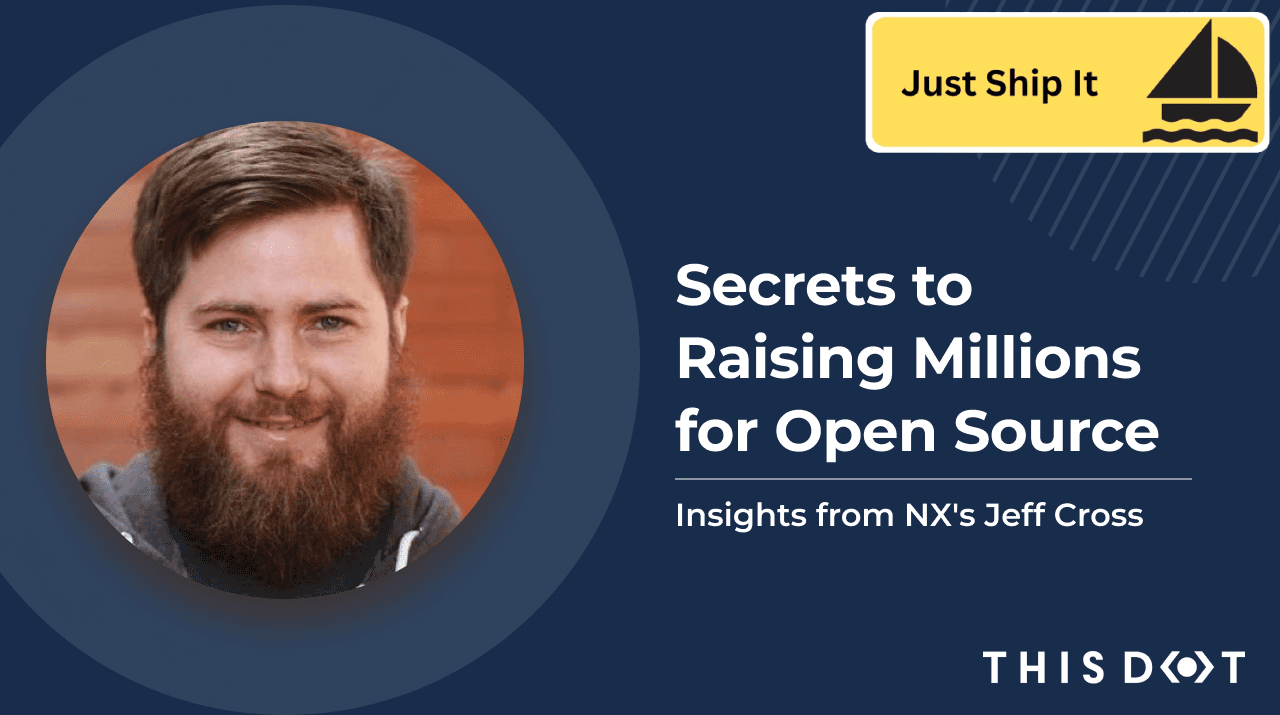
Secrets to Raising Millions for Open Source: Insights from NX's Jeff Cross | Just Ship It

2 min read
Secrets to Raising Millions for Open Source: Insights from NX's Jeff Cross | Just Ship It
This article was written over 18 months ago and may contain information that is out of date. Some content may still be relevant, but please refer to official documentation for the latest information.

"Just Ship It" is a series that gives viewers a glimpse into the dynamic realm of software by spotlighting individuals who have successfully navigated the journey from conception to tangible outcomes. The series is a platform to chronicle their paths, offering firsthand insights into the hurdles, victories, and transformative moments they encountered while realizing their ambitions.

From the inception of groundbreaking ideas to the intricacies of the creation process, "Just Ship It" captures the essence of perseverance, creativity, and unwavering commitment required to translate concepts into meaningful manifestations.

In the ever-evolving landscape of software development, the role of development tools has become increasingly crucial. Startups like NX have taken the lead in shaping this landscape, providing developers with innovative solutions for improved collaboration and productivity. In an interview between Jeff Cross, co-founder of NX, and Tracy Lee, founder of This Dot Labs, key aspects of NX's journey, strategic partnerships, the evolving dev tooling landscape, and the significance of monorepos are explored.

How has NX continued to find success? In the interview, Cross discusses how NX strategically partnered with investors who aligned with their mission. By leveraging these partnerships, NX gained access to valuable resources and guidance. The key takeaway is that successful investments are not solely about money; they are about finding the right partners who can contribute to a startup's success in multifaceted ways.

As the interview unfolds, both emphasize the importance of understanding personal motivations when embarking on an entrepreneurial journey. Each individual is driven by unique factors, and aligning these motivations with the nature of the venture is crucial for long-term success.

A significant part of the interview discusses the technical aspects of NX's journey, particularly the innovative concept of monorepos. Jeff highlights how monorepos have revolutionized software development by enabling developers to manage multiple projects within a single repository. This approach streamlines collaboration, promotes code sharing, and enhances version control.

Monorepos represent a departure from the traditional siloed repository structure, allowing teams to work seamlessly across projects while maintaining consistency and scalability. This technical innovation not only aligns with NX's vision of empowering developers but also mirrors the broader industry trend toward more efficient and collaborative software development practices.

This interview provides a glimpse into NX's ongoing journey and the broader dev tooling landscape. As NX builds beyond, the future of monorepos and developer collaboration remains an exciting and transformative journey. The insights shared in the interview underscore the multifaceted nature of the dev tooling ecosystem, showcasing the power of strategic investments, understanding personal motivations, and embracing impactful collaboration in shaping the software development landscape.

Keep reading

View all posts →

From Learning to Code to Open Source Advocate: Brian Douglas, First Hire at Netlify and First Dev Advocate at GitHub

Tracy Lee and Brian Douglas chat about coding, self learning, open source, and developer relations in this episode of Just Ship IT. Brian's coding journey started in 2013 during a challenging period when his son was born prematurely, requiring a prolonged hospital stay. He sought a way to locate churches near the hospital and realized the need for a church review app. This sparked his determination to learn to code. Brian highlights many successful developers didn't follow the traditional college route but instead found their way through self learning and unwavering dedication. Brian's path to coding was largely self guided. He utilized various online tutorials and courses to acquire the skills he needed. His learning adventure led him to the world of Ruby on Rails. Tracy and Brian emphasize the difference between self motivated learners and those who treat coding as a checkbox item. They discuss the significance of immersing oneself in the learning process to truly grasp the fundamentals. Brian worked at Netlify for about two years, a journey that began when he switched to Netlify for hosting. Eventually, Matt from Netlify reached out, offering Brian a role that would help shape the JAMstack landscape. This diverse role at Netlify involved both front end engineering and DevRel activities. Brian shares the story of creating OpenSauced.pizza. This tool exemplifies his dedication to empowering the open source community. Brian has made significant contributions in open source. He discusses the importance of mentoring others to contribute to open source projects and foster a culture of collaboration. The evolution of open source metrics is brought up, emphasizing that there's more to success than just star counts. Metrics like commit velocity and issue to PR conversion offer deeper insights into a project's health and growth. Brian and Tracy conclude their conversation with a discussion on developer relations (DevRel). They stress that DevRel professionals should prioritize engagement and building relationships over focusing solely on metrics and numbers....

2 mins
Just Ship It

Get 100k Followers by Teaching TypeScript, with Matt Pocock, Author of Total Typescript

In this episode of "Just Ship It," Tracy Lee welcomes Matt Pocock, the author of "Total TypeScript," to discuss his journey in the world of development and open source. Tracy and Matt talk about his rise to popularity as the author of "Total TypeScript" and his transition from being a singing voice teacher to a web developer. Matt's journey into the world of web development began in 2017 while he was working on his thesis. Bored with the thesis writing, he decided to explore JavaScript, marking the beginning of his development adventure. He soon found himself experimenting with ambitious projects like using the Web Audio API to analyze voice quality and other complex web applications. It was during this time that he realized his passion for coding and building things that could change the world. In 2018, Matt transitioned to full time web development. He initially worked for a company that created monitoring devices for elderly people, which required him to handle various frontend tasks. Despite leaving the job after just five months due to financial difficulties at the company, Matt's passion for development continued to grow. He went on to work for different agencies, gaining experience in various development environments and technologies. Matt's journey eventually led him to the world of open source, where he made a significant impact. He became involved with XState, a state machine and state chart library, and even joined its core team. His contributions to XState led to his involvement in the founding of a new company, Stately, which grew out of the XState core team. This transition marked a pivotal moment in his career, as he found himself contributing to a project that later became the foundation for a new venture. One of Matt's standout accomplishments in the tech community is Total TypeScript. This comprehensive TypeScript course covers advanced topics, such as type transformations, generics, and complex type patterns. Matt's teaching style, which emphasizes practicality and real world applications, resonated with developers looking to level up their TypeScript skills....

2 mins
Just Ship It

Behind the Scenes at CodePen & CSS Tricks with Chris Coyier

In this episode of Just Ship It, Tracy Lee chats with Chris Coyier, known for CSS Tricks and CodePen. CSS Tricks, a staple in the development community, was founded in 2007 as a blog. Chris reflects on how it all began and how this project has evolved over the years. One of the significant milestones in CSS Tricks' history was its acquisition by Digital Ocean about a year ago. Chris expresses his satisfaction with the fact that the team and content have been preserved, ensuring that the valuable knowledge and community of CSS Tricks continue to thrive. Chris and Tracy touch on Chris's early work and how he got started with CSS Tricks. He worked at SurveyMonkey while concurrently managing CSS Tricks. Chris outlines the birth of CodePen, a platform that revolutionized the way developers embed code demos directly into their blog posts. He sheds light on how CodePen secured $1 million in funding and how that investment played a pivotal role in expanding the team and facilitating growth. The discussion covers the intricacies of fundraising for startups and the advantages and challenges that come with it. CodePen has been in operation for over a decade with over 10 million page views per month, peaking at a staggering 12 million. It has become an integral part of documentation sites for popular technologies like React, Vue, Smashing Magazine, and MDN. Social media, especially Twitter, played a crucial role in driving CodePen's growth. Tracy mentions platforms like Seesmic and Omegle, highlighting how trends from the past can resurface and gain popularity once again. The conversation then shifts towards personal branding in the tech industry and how it has evolved over time. They explore the challenges faced by developers who strive to maintain a strong personal brand in the modern era. Chris and Tracy emphasize the importance of starting a blog without overthinking it, pointing back to their early days of blogging about topics they were passionate about. They reflect on the freedom and creativity that comes with not knowing too much, allowing individuals to share their genuine excitement and discoveries. Chris shares some decisions he would have made differently, such as creating separate editors for CodePen. They discuss the complex nature of adding features that initially seem promising but eventually become maintenance nightmares. The conversation touches on the pressures of blogging, from the desire to always be right to the potential for making accessibility mistakes. They highlight the importance of embracing the journey, learning from mistakes, and continually evolving. Chris mentions that his success with CSS Tricks undoubtedly contributed to the marketing and growth of CodePen. As CodePen continues to evolve, the team is hard at work developing the next version of the platform to take it to the next level....

2 mins
Just Ship It

From Tech Support to Podcasting Pro: The Success of JavaScript Jabber and Ruby Rogues with Charles Max Wood

In this episode, Tracy chatted with Charles Max Wood about his early days in tech support to becoming a podcast host and entrepreneur in the tech industry. Charles’ journey began with a degree in computer engineering. While his educational background was hardware focused, his passion for programming led him down an unexpected path. Fresh out of college, he found himself working at a company called Mozi, where his role primarily involved tech support and assisting users with their Windows backup issues. It was during his time at Mozi that, faced with the challenge of managing workloads efficiently without adequate software, Charles and his team decided to build their own solution. Charles started developing software in Rails to streamline their operations. While working in quality assurance, a colleague introduced Charles to podcasts. He soon discovered "Rails Envy," a podcast that sparked his interest. He reached out to the host, Greg Pollack, who not only responded but also played a crucial role in Charles' podcasting journey. Charles founded "Ruby Rogues" in 2011. This panel style podcast became a hit in the programming community. It was followed by several other podcasts, including "JavaScript Jabber," "Adventures in Angular," "React Roundup," and many more. There was an emphasis on genuine enthusiasm for the topics discussed on podcasts, which is what attracts and retains listeners. Podcasters must love what they talk about to keep their audience engaged and build a loyal following. Initially, Charles’ podcasts were passion projects, but as the audience grew, so did the opportunities. Sponsorships became a primary source of income for the shows. However, Charles recognized the need to diversify revenue streams to reduce vulnerability. The decision to transition from a full time job to entrepreneurship allowed Charles to focus on his podcasts and explore other ventures, including coaching and a mobile app designed to help individuals advance in their careers. Charles emphasizes the importance of passion in podcasting, the potential for monetization, and the value of diversifying income streams. His transition to entrepreneurship allowed him to fully invest in his passions and explore new opportunities, making him not only a content creator but also a tech entrepreneur....

2 mins
Just Ship It