Skip to content

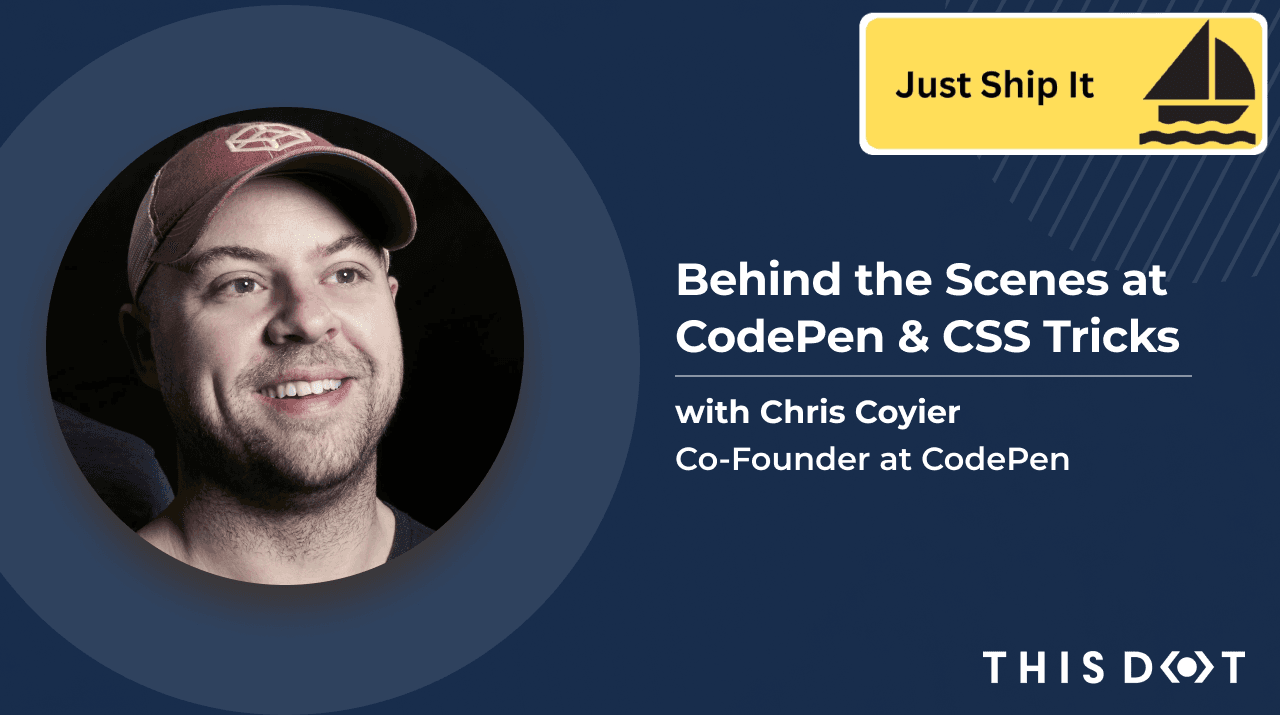
Behind the Scenes at CodePen & CSS Tricks with Chris Coyier

This article was written over 18 months ago and may contain information that is out of date. Some content may be relevant but please refer to the relevant official documentation or available resources for the latest information.

In this episode of Just Ship It, Tracy Lee chats with Chris Coyier, known for CSS Tricks and CodePen. CSS Tricks, a staple in the development community, was founded in 2007 as a blog. Chris reflects on how it all began and how this project has evolved over the years.

One of the significant milestones in CSS Tricks' history was its acquisition by Digital Ocean about a year ago. Chris expresses his satisfaction with the fact that the team and content have been preserved, ensuring that the valuable knowledge and community of CSS Tricks continue to thrive.

Chris and Tracy touch on Chris's early work and how he got started with CSS Tricks. He worked at SurveyMonkey while concurrently managing CSS Tricks. Chris outlines the birth of CodePen, a platform that revolutionized the way developers embed code demos directly into their blog posts. He sheds light on how CodePen secured $1 million in funding and how that investment played a pivotal role in expanding the team and facilitating growth. The discussion covers the intricacies of fundraising for startups and the advantages and challenges that come with it.

CodePen has been in operation for over a decade with over 10 million page views per month, peaking at a staggering 12 million. It has become an integral part of documentation sites for popular technologies like React, Vue, Smashing Magazine, and MDN. Social media, especially Twitter, played a crucial role in driving CodePen's growth.

Tracy mentions platforms like Seesmic and Omegle, highlighting how trends from the past can resurface and gain popularity once again. The conversation then shifts towards personal branding in the tech industry and how it has evolved over time. They explore the challenges faced by developers who strive to maintain a strong personal brand in the modern era.

Chris and Tracy emphasize the importance of starting a blog without overthinking it, pointing back to their early days of blogging about topics they were passionate about. They reflect on the freedom and creativity that comes with not knowing too much, allowing individuals to share their genuine excitement and discoveries.

Chris shares some decisions he would have made differently, such as creating separate editors for CodePen. They discuss the complex nature of adding features that initially seem promising but eventually become maintenance nightmares.

The conversation touches on the pressures of blogging, from the desire to always be right to the potential for making accessibility mistakes. They highlight the importance of embracing the journey, learning from mistakes, and continually evolving.

Chris mentions that his success with CSS Tricks undoubtedly contributed to the marketing and growth of CodePen. As CodePen continues to evolve, the team is hard at work developing the next version of the platform to take it to the next level.

This Dot is a consultancy dedicated to guiding companies through their modernization and digital transformation journeys. Specializing in replatforming, modernizing, and launching new initiatives, we stand out by taking true ownership of your engineering projects.

We love helping teams with projects that have missed their deadlines or helping keep your strategic digital initiatives on course. Check out our case studies and our clients that trust us with their engineering.

You might also like

Creator of Vue.js and Vite: Evan You's Journey From Google Engineer to Open Source Pioneer cover image

Creator of Vue.js and Vite: Evan You's Journey From Google Engineer to Open Source Pioneer

In this episode of "Just Ship It," Evan You, the creator of Vue.js and Vite, discusses his journey to becoming an independent open-source developer. His dedication to Vue.js and (and now Vite) since 2016 has made him a prominent figure in the open-source community. This conversation highlights Evan's transition to full-time open-source work, the growth of Vue.js, and his aspirations for the future. Evan shares his journey toward becoming a full-time open-source developer and the challenges and factors that facilitated this shift. Evan attributes his success to a combination of luck and persistence. He elaborates on his experiences while developing Vue.js, emphasizing his passion for solving intriguing problems. He outlines his approach to API-driven development, where he designs how things should work before implementing them. Evan explains that Vue.js initially attracted users through platforms like Hacker News and Chinese social networks, thanks to its bottom-up approach and user-friendly documentation. This is in stark contrast to larger frameworks like React and Angular, which often gain enterprise-level adoption due to corporate backing. Evan reflects on Vue.js's evolution, highlighting the turning point when it gained prominence in the Laravel community, solidifying its reputation as a dependable framework for production projects. He discusses how Vue.js particularly appeals to back-end developers, as it seamlessly integrates with traditional back-end frameworks. The conversation touches on Vue.js's adoption in different regions, particularly in Asia, attributing its success to Evan's active participation in Chinese social networks. Additionally, Evan underscores the importance of high-quality Chinese documentation. The episode concludes with Evan sharing the pace and satisfaction he found in working on Vue.js during its early stages, contrasting it with the more complex decision-making processes required as the project grew. Evan's work on Vue.js and Vite has had a significant impact on the web development landscape, and his commitment to fostering a thriving open-source community continues to shape the future of front-end development....

From Learning to Code to Open Source Advocate: Brian Douglas, First Hire at Netlify and First Dev Advocate at GitHub cover image

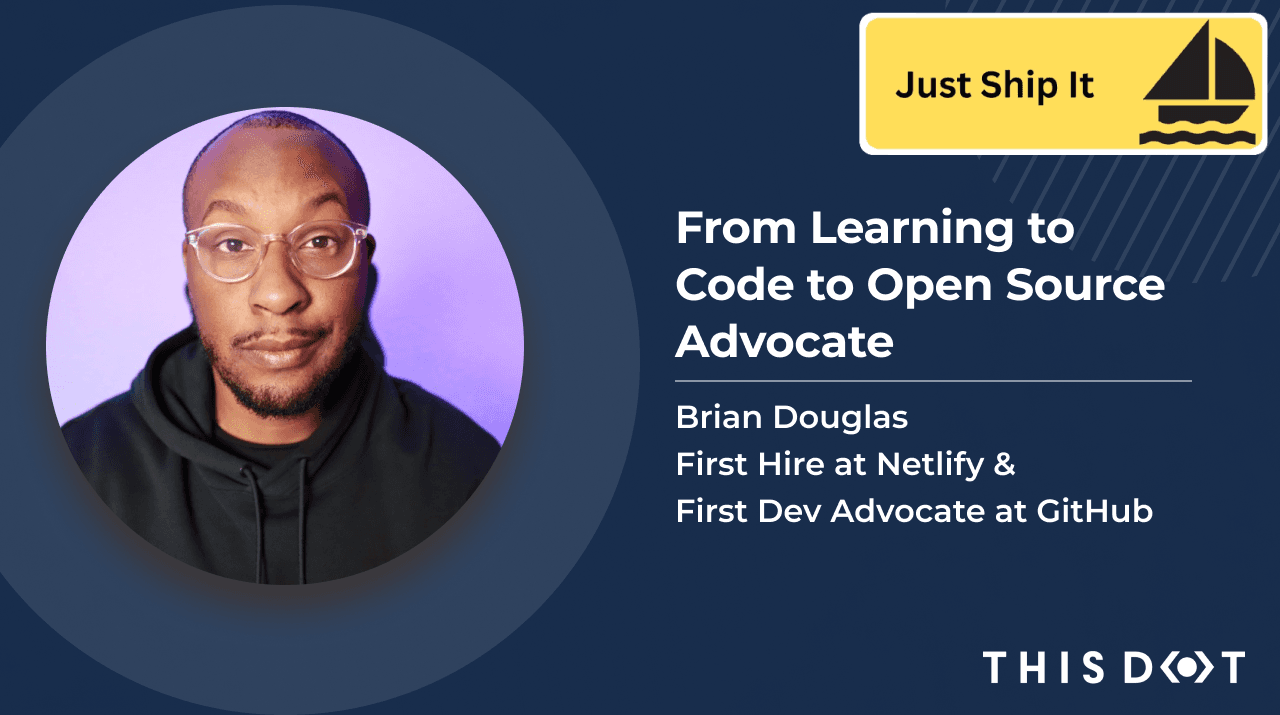
From Learning to Code to Open Source Advocate: Brian Douglas, First Hire at Netlify and First Dev Advocate at GitHub

Tracy Lee and Brian Douglas chat about coding, self-learning, open source, and developer relations in this episode of Just Ship IT. Brian's coding journey started in 2013 during a challenging period when his son was born prematurely, requiring a prolonged hospital stay. He sought a way to locate churches near the hospital and realized the need for a church review app. This sparked his determination to learn to code. Brian highlights many successful developers didn't follow the traditional college route but instead found their way through self-learning and unwavering dedication. Brian's path to coding was largely self-guided. He utilized various online tutorials and courses to acquire the skills he needed. His learning adventure led him to the world of Ruby on Rails. Tracy and Brian emphasize the difference between self-motivated learners and those who treat coding as a checkbox item. They discuss the significance of immersing oneself in the learning process to truly grasp the fundamentals. Brian worked at Netlify for about two years, a journey that began when he switched to Netlify for hosting. Eventually, Matt from Netlify reached out, offering Brian a role that would help shape the JAMstack landscape. This diverse role at Netlify involved both front-end engineering and DevRel activities. Brian shares the story of creating OpenSauced.pizza. This tool exemplifies his dedication to empowering the open source community. Brian has made significant contributions in open source. He discusses the importance of mentoring others to contribute to open source projects and foster a culture of collaboration. The evolution of open source metrics is brought up, emphasizing that there's more to success than just star counts. Metrics like commit velocity and issue-to-PR conversion offer deeper insights into a project's health and growth. Brian and Tracy conclude their conversation with a discussion on developer relations (DevRel). They stress that DevRel professionals should prioritize engagement and building relationships over focusing solely on metrics and numbers....

This Dot AI Field Notes - Anatomy of a Coding Harness cover image

This Dot AI Field Notes - Anatomy of a Coding Harness

A coding agent is not magic, it’s a loop. We call this a harness. The harness is a deterministic layer of code that wraps an LLM. Claude Code is a harness. Codex is a harness. Pi is a harness. The harness, on initialization, provides to the LLM a system prompt defining all tools the harness implements for the LLM. Without the harness, you cannot read or modify files on the user’s local filesystem without them having to copy-and-pasting by hand. The harness is the final place where engineers can customize how coding agents do work before the LLM takes over. Think of the LLM as a train and the harness as the rails the train rides on. Below… one full task executed by a harness, traced step by step....

AI Is Speeding Up Development. But Where Are the New Bottlenecks? cover image

AI Is Speeding Up Development. But Where Are the New Bottlenecks?

AI is accelerating development, but it’s also exposing everything else that’s broken. At the Leadership Exchange, leaders unpacked how AI is reshaping the SDLC and what organizations need to address beyond just coding to make adoption successful. Moderated by Rob Ocel, VP of Innovation at This Dot Labs, the panel featured Itai Gerchikov at Anthropic and Harald Kirschner, Principal Product Manager for GitHub Copilot & VS Code at Microsoft. Panelists explored the current state of AI adoption across the software development lifecycle and shared practical insights into how organizations can effectively integrate AI tools. Panelists discussed how companies are investing in AI tools, skills, and managed competency programs to support developers. While AI can dramatically accelerate coding, the panel emphasized that adoption affects every stage of the SDLC. Bottlenecks now appear in testing, DevOps, product delivery, and marketing as AI speeds up development. Organizations that address technical debt and process inefficiencies are better positioned to extract maximum value from AI tools. The conversation also focused on opportunities and risks. Security, governance, and workforce education were highlighted as critical factors for adoption. Panelists stressed that AI initiatives should be aligned with broader business goals rather than pursued in isolation. They noted that companies experimenting at the cutting edge need to consider organizational readiness just as carefully as technical capabilities. Panelists also explored how leading organizations are navigating the early stages of adoption. Those ahead of the curve are using structured experimentation, prioritizing process improvements, and continuously evaluating outcomes to refine their AI strategies. Learning from these early adopters allows other organizations to anticipate emerging trends and prepare for the next phase of AI adoption rather than simply replicating past approaches. Key Takeaways - Investing in AI skills and tools should be done thoughtfully, with clear alignment to business objectives. - Examining the full SDLC helps identify bottlenecks that AI may accelerate or expose. - Organizations can gain a competitive advantage by learning from early adopters and planning for where AI adoption is heading. AI adoption is not just a technical initiative; it is a strategic transformation that requires attention to people, process, and technology. Organizations that balance innovation with operational discipline will be best positioned to capture the full potential of AI across the software lifecycle. Seeing similar challenges in your own SDLC? Let’s compare notes. Join us at an upcoming Leadership Exchange or reach out to continue the conversation. Tracy can be reached at tlee@thisdot.co....

Let's innovate together!

We're ready to be your trusted technical partners in your digital innovation journey.

Whether it's modernization or custom software solutions, our team of experts can guide you through best practices and how to build scalable, performant software that lasts.

Prefer email? hi@thisdot.co