 Tailwind CSS
 Aws Amplify
 NextJS
 DynamoDB
Overview
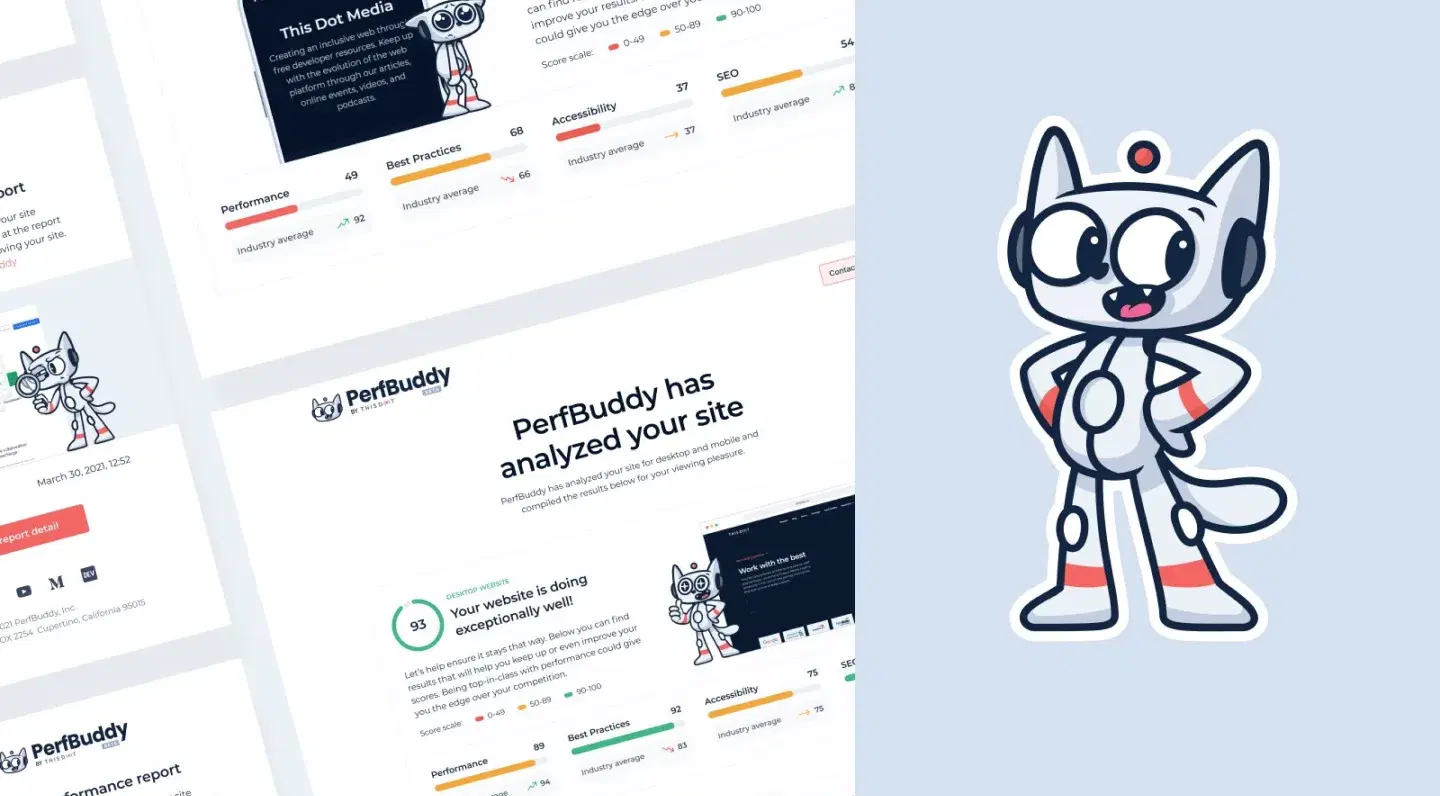
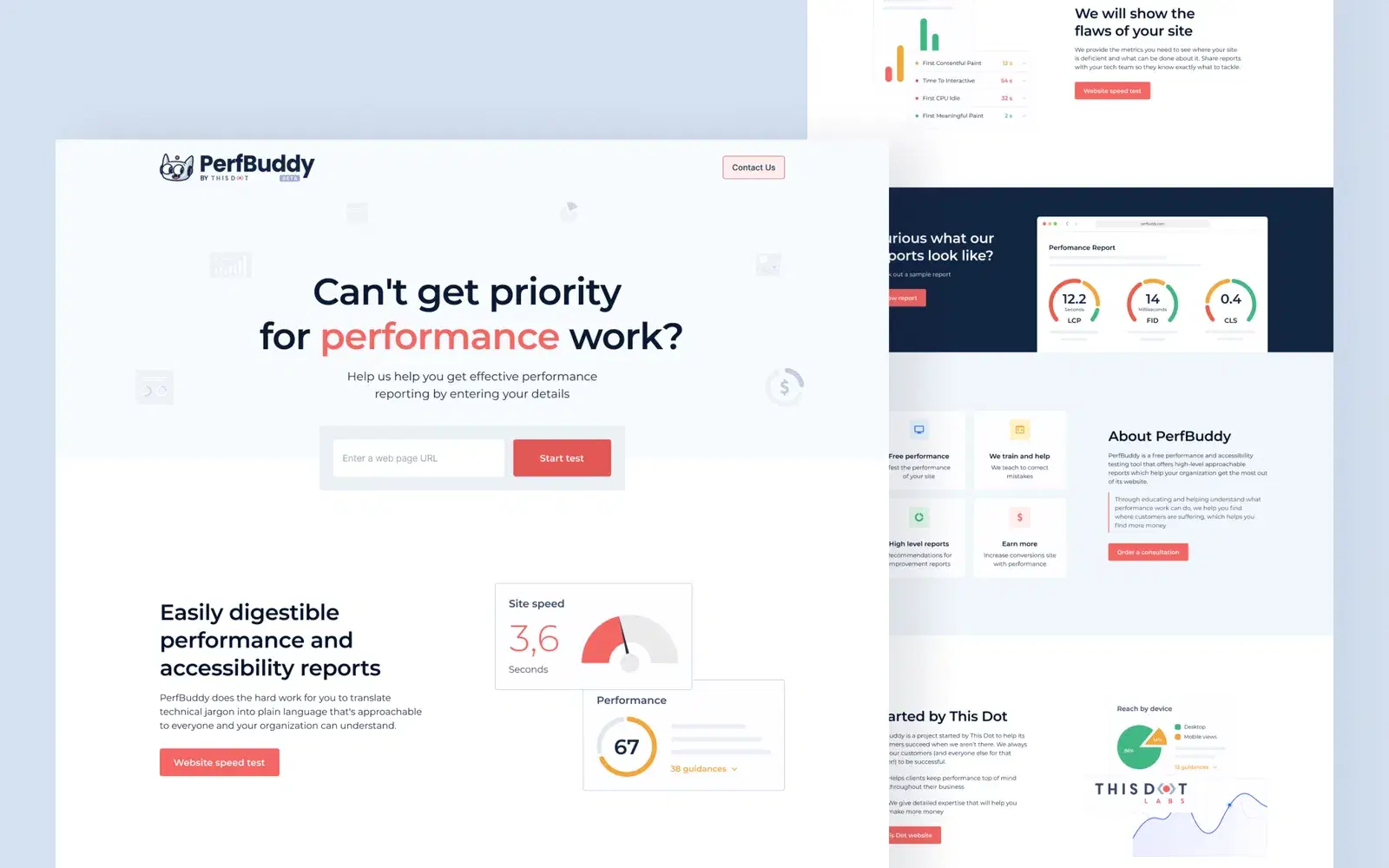
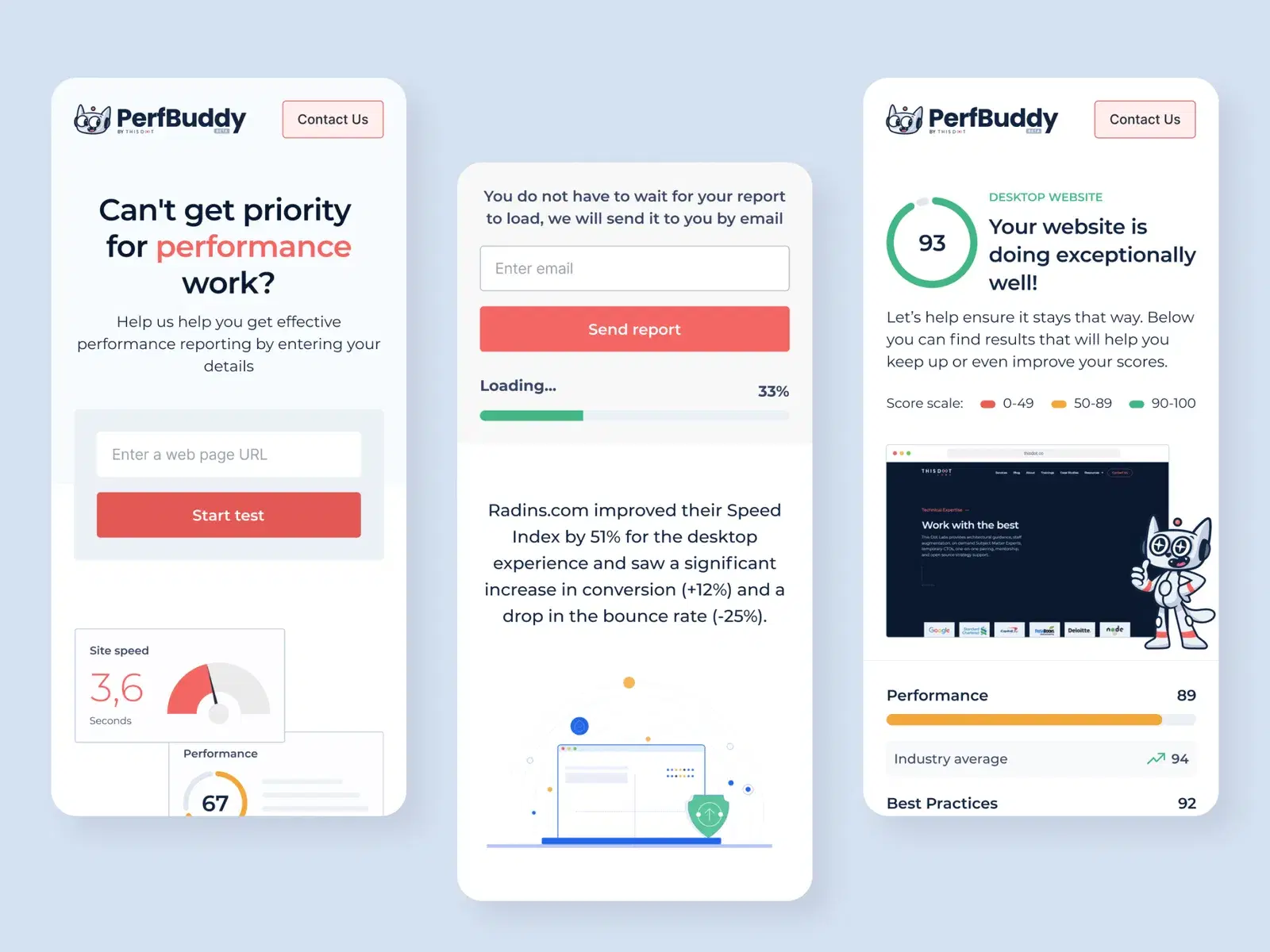
PerfBuddy is a tool that provides easily digestible performance and accessibility reports that your organization can understand.
PerfBuddy does the hard work for you to translate technical jargon into plain language that's approachable to everyone.
Services Provided
This was a greenfield project that we designed, developed, and brought to market.
Tech-stack
- Tailwind CSS
- Aws Amplify
- NextJS
- DynamoDB
Quick and Easy Web Performance
Web performance metrics should be at the tip of anyone’s fingertips.
Being able to share a report that business leaders can understand is an invaluable tool all teams should have.
How Do You Use PerfBuddy?
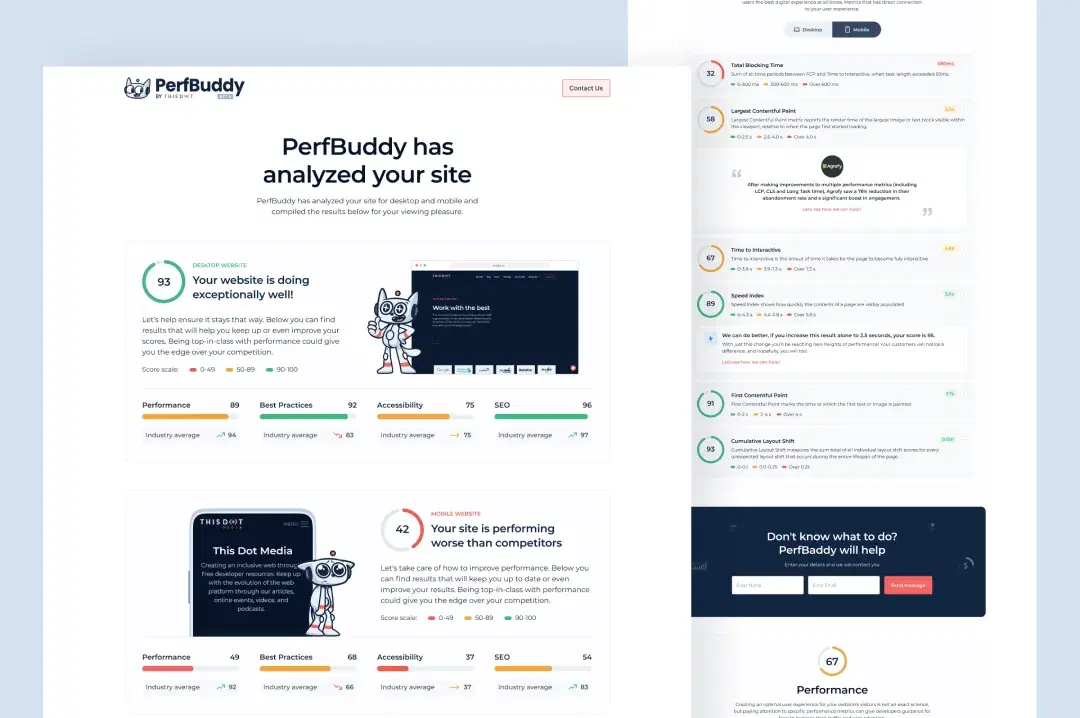
A performance report can be generated with the click of a button. The report helps stakeholders understand the necessity of investing development cycles into improving performance, and provides a roadmap for teams to tackle immediately.
 One click
 Improvement report
Optimizing Upstream Communication for Development Teams
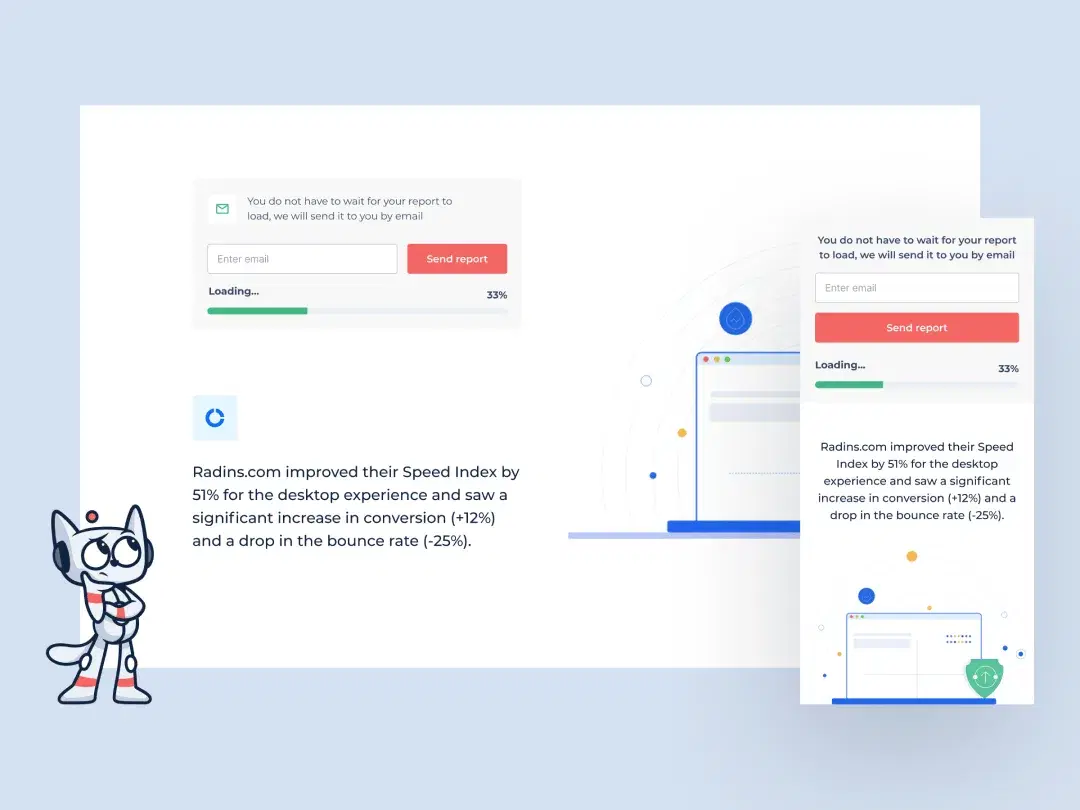
Similar performance testing and analysis products are available, but they all lack the ability to easily summarize and contextualize metrics to effectively communicate upstream.
PerfBuddy offers:
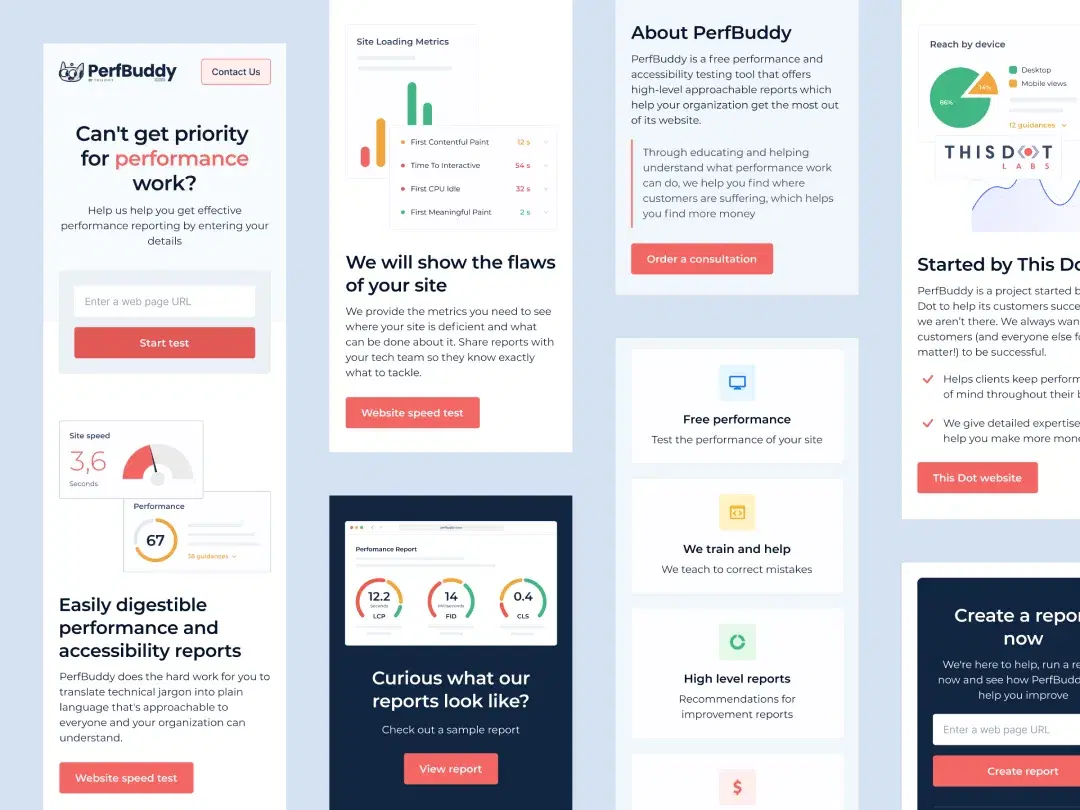
- Performance overview and high-level scores with easily digestible summaries.
- Detailed metrics with clear explanations about performance, accessibility, SEO, etc.
- A report that someone with no development experience can understand.
- Extra content and case studies to show benefits of performance.
PerfBuddy Technologies of Choice
- The This Dot Labs team chose to build the project’s frontend using NextJS with TailwindCSS.
- PerfBuddy hosts mostly static content, which helps optimize SEO, but also needed to optimally display dynamic content generated within user reports.
- NextJS permits this flexibility, and Tailwind was selected to help unify our style system and keep the UI looking clean and consistent.
- PerfBuddy’s backend uses AWS Amplify’s REST endpoints with DynamoDB. This gives us a data store that easily complies with GDPR needs and allows us to quickly deploy and manipulate endpoints.
- We’re using a service called Microlink (https://microlink.io) to generate the Lighthouse data reports. Eventually, we’ll either help expand their offering, or rebuild using the Chrome Webdriver, depending on the future roadmap of PerfBuddy.
- We employed Brad Frost’s atomic design to help us plan and implement our design system so building larger components, as needed, would be easier. This also allows us to isolate core business logic in our UI to help reduce risk to the remainder of the system, allowing for easier redesigns.
Optimal Team Design for Interchangeable Workforce
PerfBuddy has been a project exposed to many developers who may not work on it consistently, like many projects in enterprise organizations.
To help our team manage this, we broke up the development process into 1-2 hour identifiable segments that enabled individuals to contribute when available, while not getting stuck in long debugging, or critical thinking paths.